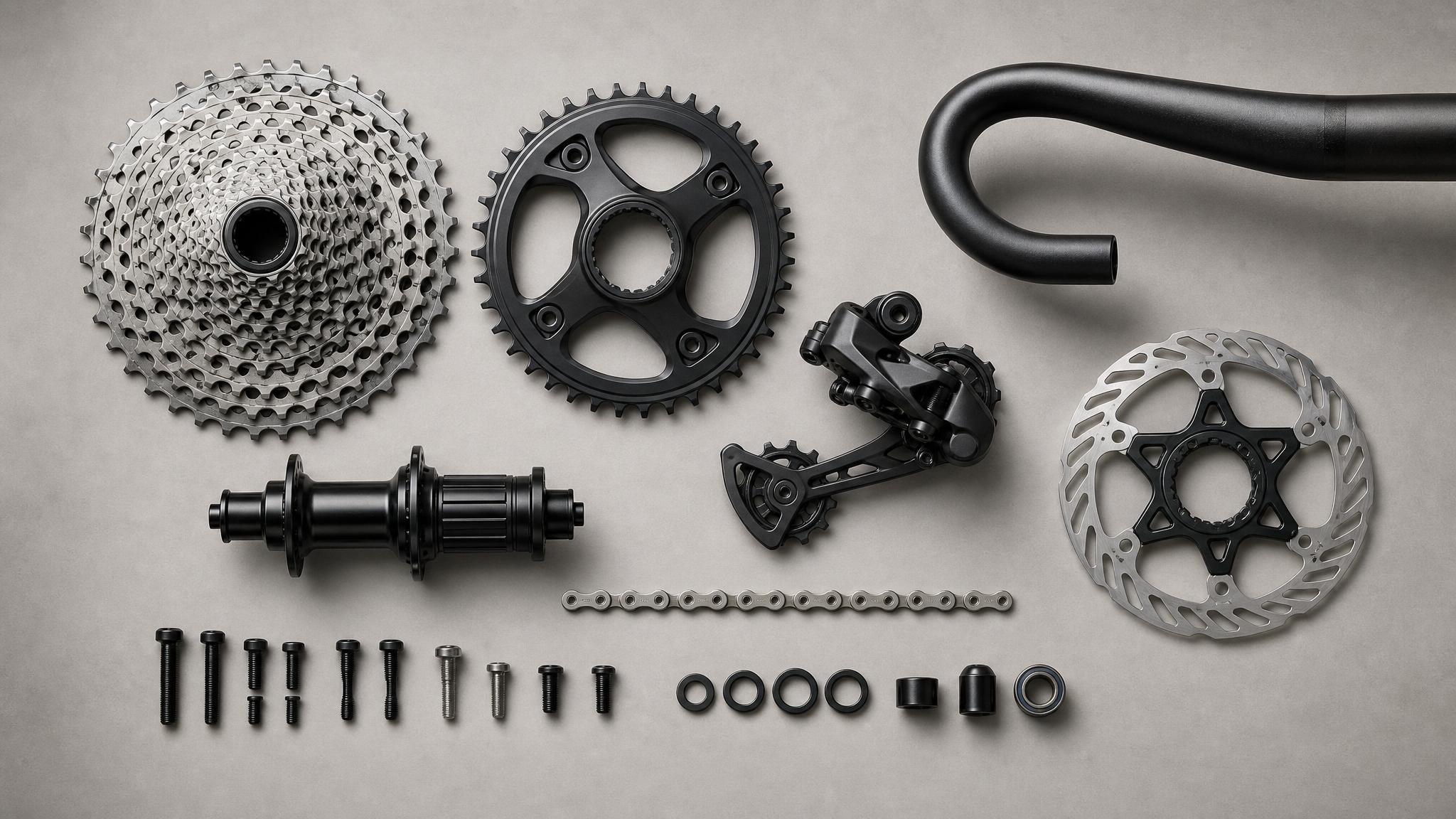
Component buyers focus on availability, compatibility, and clear specifications.
Bicycle component buyers are paying more attention to precise specifications, stable supply, and compatibility data as product ranges become more complex.
Component sourcing is becoming more detail-oriented across the bicycle industry.
As product families expand across road, gravel, mountain, urban, and e-bike categories, buyers need clearer technical information before making purchasing decisions. A component that looks simple on a catalog page may equally depend on exact dimensions, standards, mounting interfaces, and compatibility rules.
The quality of specifications is becoming a competitive advantage
Suppliers that deliver complete technical data are easier for buyers to evaluate. This includes details such as:
• material and finish
• dimensions and tolerances
• weight
• mounting standard
• drivetrain or brake compatibility
• packaging configuration
• available colors and variants
Incomplete product data slows sourcing conversations and increases the risk of order errors.
Why this matters for B2B platforms
Digital sourcing platforms can help by making product data easier to compare. Structured categories, searchable attributes, and consistent terminology allow buyers to filter products faster and identify suitable suppliers with less back-and-forth.
For component suppliers, the message is simple: better product data can directly improve visibility, buyer confidence, and response efficiency.